
Blog posts
What is a BTO (Build-to-Own) warehouse, and when is it advantageous to construct a facility for ownership?
A BTO (Build-to-Own) warehouse is an industrial facility designed and built by a developer to a client’s specific specifications, with the client purchasing the property and taking ownership of it upon completion of the development process. Unlike the lease model (BTS), the BTO model allows a company to become the owner of a strategic asset, which, given current rates of return and the projected increase in land values by 2026, is considered one of the safest forms of corporate capital investment.
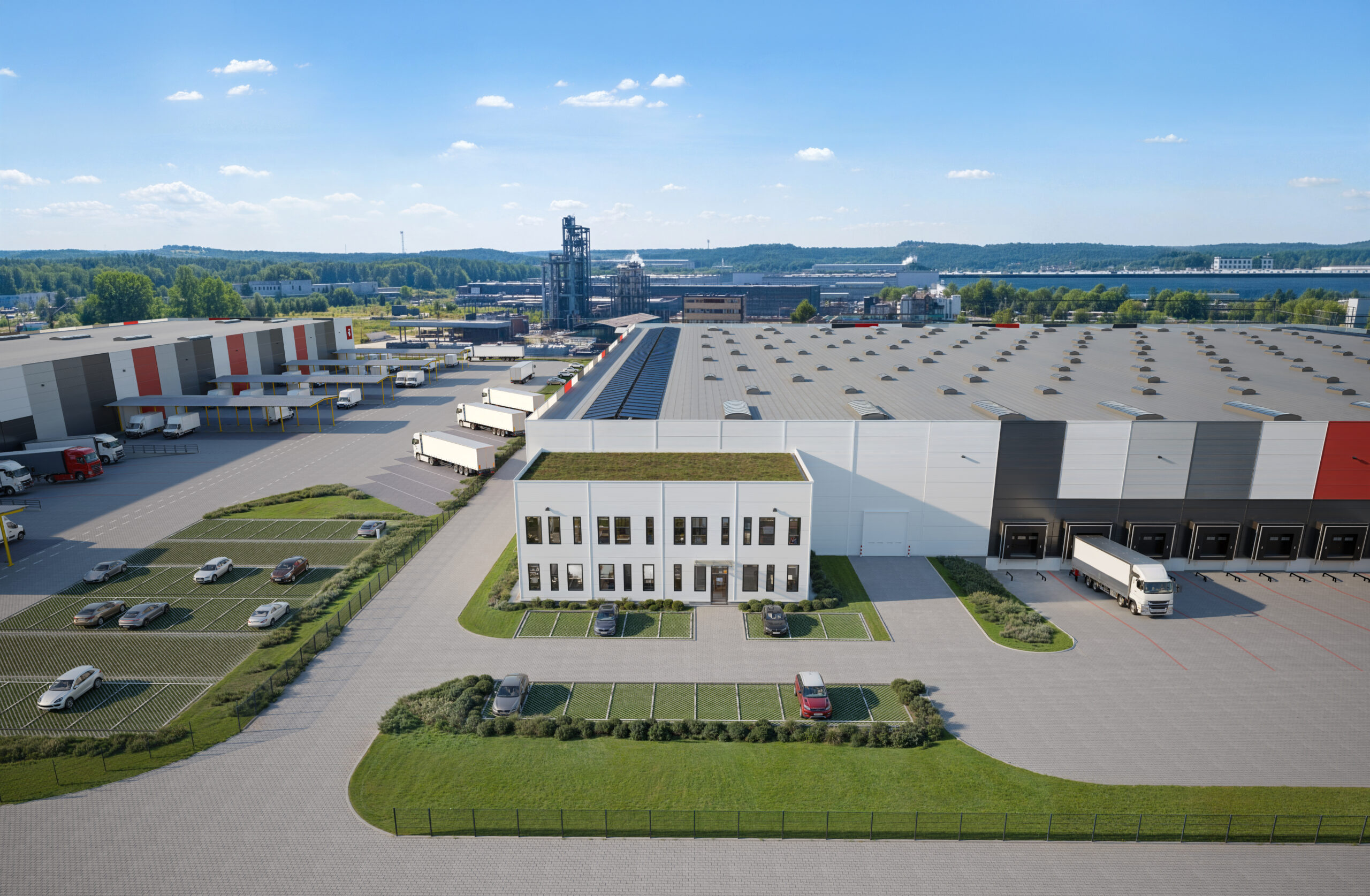
Table of Contents
Key takeaways about BTO warehouses
- Asset ownership is key in BTO: such a facility converts operating costs (rent) into the company’s fixed assets, thereby increasing its book value.
- Full control. The investor has 100% influence over the technical standards, ESG solutions, and future expansion of the facility.
- The BTO model allows for the use of depreciation, which is crucial for tax optimization at large companies.
- The success of a BTO project depends on choosing a partner like 7R, which has the engineering expertise to see the project through from the building permit to the notarized deed.
When is it better to choose a BTO model instead of renting?
The decision to choose the BTO (Build-to-Own) model is typically driven by long-term operational and financial strategies. Companies opt for the BTO model in several specific scenarios:
- When the production process requires the installation of heavy production lines that are difficult to dismantle, furnaces, machine foundations, or advanced automation systems (such as shuttle systems), the relocation of which would be uneconomical after 10 years.
- If a company plans to operate in a given location for at least 15–20 years, the cumulative cost of rent usually exceeds the cost of building its own facility.
- When a company has excess cash or access to preferential debt financing, investing in its own real estate generates a higher rate of return than leaving the cash in a savings account.
- Ownership allows for the uncompromising implementation of zero-emission technologies (e.g., large-scale PV systems, heat pumps), which in a leasing model may be restricted by the portfolio owner’s policies.
Which companies in Poland are carrying out BTO projects in 2026?
The BTO construction and consulting market requires significantly greater engineering expertise than standard leasing. The leading companies offering BTS and BTO warehouses are:
1. 7R
7R stands out in the market as a developer that not only builds for its own portfolio but also serves as a specialized General Contractor for external clients. With a team of over 100 experts, 7R manages the BTO process comprehensively: from auditing technological needs, through land acquisition and obtaining environmental permits, all the way to turnkey construction. It is precisely 7R that is chosen for projects of the highest complexity (e.g., for the automotive or pharmaceutical industries), where precision in execution determines the factory’s efficiency.
2. Panattoni
Europe's largest real estate developer, which, thanks to its scale and extensive land bank, offers support for the implementation of large-scale manufacturing and warehousing projects throughout the country.
3. Hillwood
A company focused on key logistics hubs, offering construction support to businesses seeking locations along major transit routes.
BTO vs. Long-Term Lease. CAPEX vs. OPEX
For CFOs, the choice between BTO and leasing (BTS) is primarily a decision regarding balance sheet structure and cash flow.
| Feature | BTO model (custom-built) | Build-to-Suit (BTS) model |
| Financial classification | CAPEX (Capital Expenditures) | OPEX (Operating Expenses) / IFRS 16 |
| Impact on the balance sheet | Increase in fixed assets | Lease liability (leverage) |
| Depreciation | The ability to depreciate a building | None (rent is a direct expense) |
| Financing costs | Interest on an investment loan | The developer's margin included in the rent |
| Risk Management | Full control over utility costs and ESG | The risk of rent increases after the lease term |
Why is 7R the ideal partner for BTO projects?
Building a warehouse for your own use involves construction, legal, and administrative risks. 7R minimizes these risks through a unique approach:
- With over 15 years in the market and 1.8 million square meters of completed projects, we have a proven track record of expertise in procedures and regulations.
- 7R Green Saver Standard. When building a BTO property with 7R, the investor receives a ready-made “green passport” for their property, which facilitates subsequent ESG reporting in accordance with the CSRD.
- Properties developed by 7R are highly regarded by investment funds —the total sales value of 7R’s projects amounts to €1.4 billion, demonstrating that these buildings retain their market value over the years.
FAQ – Frequently Asked Questions About BTO Projects
About the author
Author's Bio

Read more
Related articles
 Article
Warehouse Construction – Construction Work and the Role of the Logistics Developer
 Article
Supply chain decarbonization. What technologies reduce a warehouse’s carbon footprint?
 Article