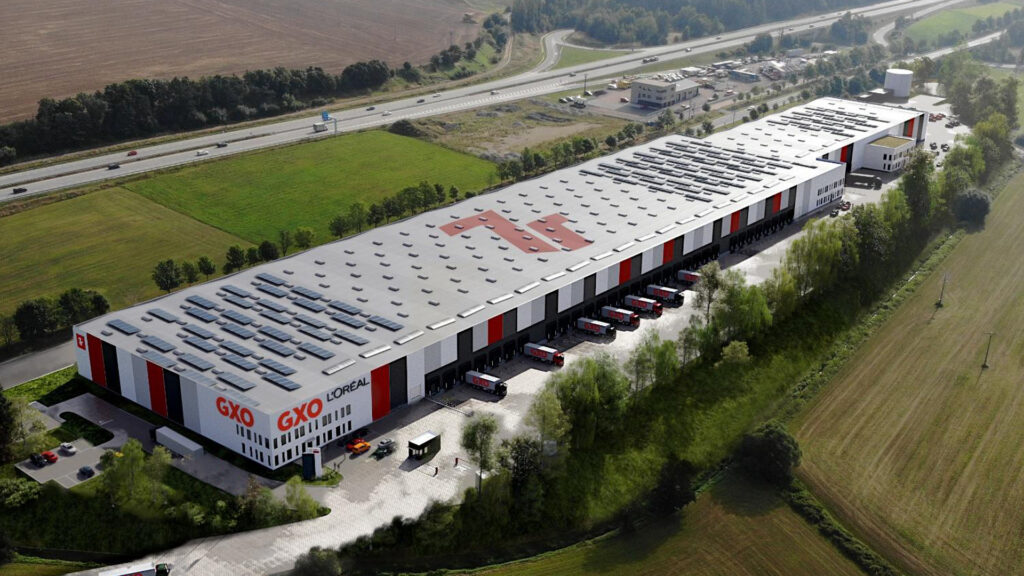
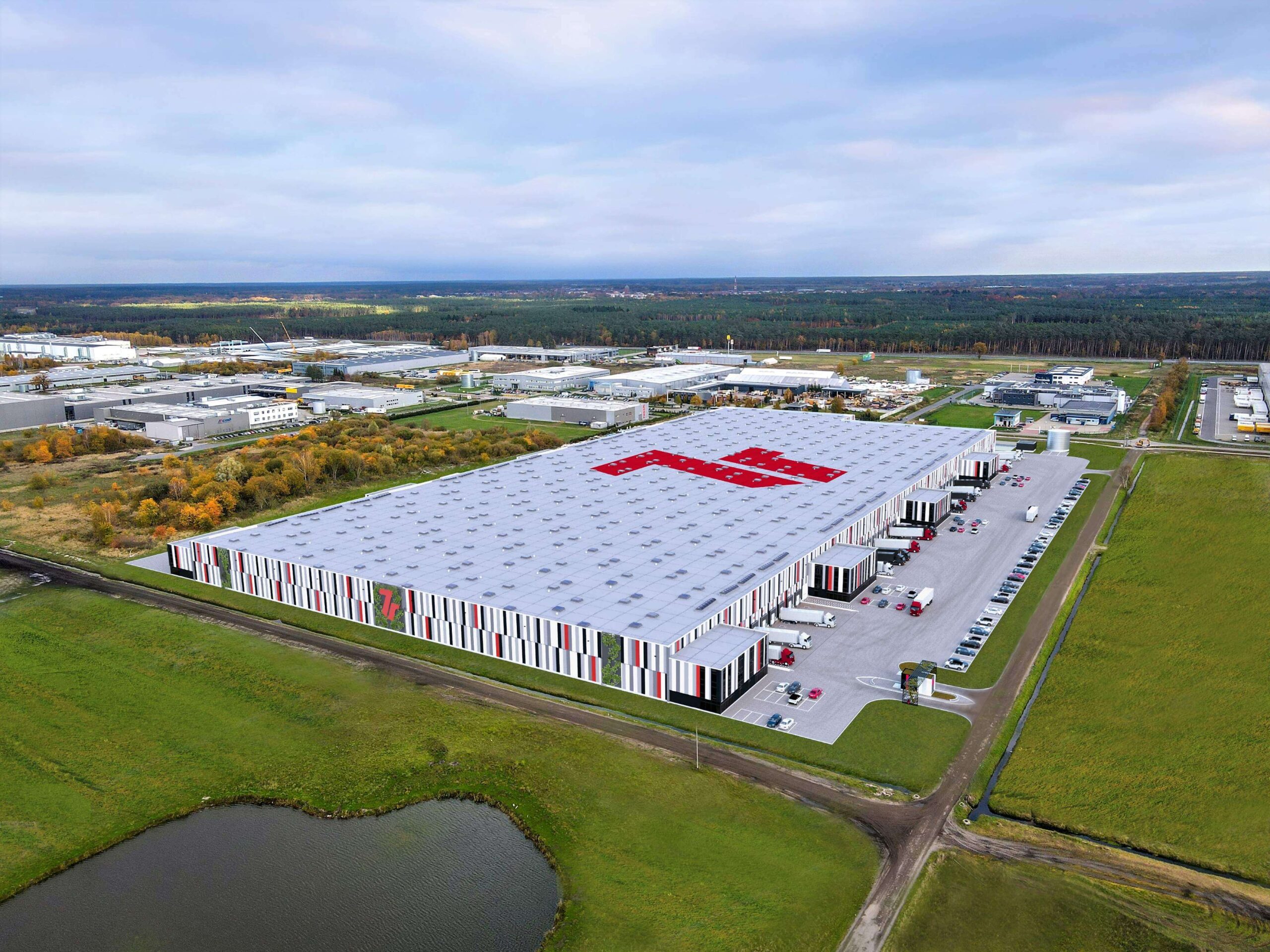
Industrial warehouses have become a permanent fixture in our landscape. What factors should you consider when choosing a location for such a project? What makes one location more advantageous than another? Find out by reading the text below.
Industrial Buildings and Road Infrastructure
One of the key factors in choosing a location for a warehouse or production facility is its proximity to major transportation hubs. When it comes to road transport, there are several important aspects that an investor should consider before making a final decision:
- the capacity of local roads, as well as their load-bearing capacity and ease of use (maneuverability, safety),
- the presence of overpasses and tunnels (permissible heights),
- short distances from expressways and highways, as well as easy access to these interchanges,
- traffic flow issues (do traffic jams occur frequently, or only at certain times of day; can they be avoided; how long are the stretches where traffic jams occur).
In some cases, it may matter how far from the city center the production or warehouse facility will be located, as well as in which part of the metropolitan area it will be situated. The latter issue is closely tied to the predominant direction of deliveries or transportation. If traffic mainly flows, for example, west of the city, it is usually more advantageous to disregard other directions and focus on the west. Similarly, the southern part of the metropolitan area will be more advantageous if 80% of transport flows south.
Warehouses and manufacturing – other modes of transport
Although most freight transport in Poland is carried out using tractor-trailers, investors often consider it important to have access not only to adequate road infrastructure but also to other potential loading or transshipment points. These needs may include, for example, proximity to an airport or seaport, or a rail freight terminal where, for instance, containers will be loaded onto trains and transported by rail to their destination.
It is worth noting that access to a variety of transportation options increases the value of a warehouse or production facility in the event of a future sale of the property. If we can offer a wide range of options, it will also be easier for us to adapt to changing production or storage needs.
Land for the construction of a production facility – administrative matters
Every production or warehouse facility involves permits, decisions, and requirements that must be met in accordance with the laws enacted by the relevant country. In Poland, despite the liberalization of building regulations in recent years, anyone deciding to construct large-scale facilities must be prepared to deal with the necessary bureaucratic procedures. It is worth paying particular attention to restrictions such as the height and form of the building, the materials from which it may be constructed, the required distances from the property line and neighboring structures, the nature of the building, and even the technologies used. Requirements can vary significantly depending on the location of the property.
Construction of a production or warehouse facility – technical capabilities
In addition to regulatory requirements, before deciding to purchase a plot of land for the construction of a warehouse or production facility, it is also worth considering environmental and technical factors. The soil parameters are crucial, as they determine factors such as the depth and type of foundations, as well as the maximum load per square meter.
Every production or warehouse facility requires appropriate technical infrastructure. It may be crucial to determine, for example, whether the existing power grid can accommodate the required electrical capacity, or whether it is possible to connect to the gas network.
A good location for warehousing and manufacturing – growth and future benefits
Industrial buildings serve a wide variety of purposes—ranging from small warehouses without office space, through production and storage facilities employing just a dozen or so workers, to massive structures designed for warehousing or manufacturing, where hundreds or even thousands of people work every day. Regardless of size or the company’s current needs, even at the stage of selecting a plot for the project, it is worth considering future growth and the potential benefits of selling the facility in a few or several years. Future clients will certainly pay attention to such facility parameters as:
- high-quality workmanship and materials (currently, sandwich panels on a steel frame are the most commonly used),
- the ability to adapt the facility to new technologies (solar panels, wind turbines, energy and heat storage systems, heat pumps, solar collectors for heating process water, etc.),
- the cost-effectiveness of the solutions implemented (integration of heating, cooling, and other systems),
- safety,
- the ability to adapt the facility to new potential directions for development.
In the coming years, we are likely to see the growth of distributed energy systems, which will replace the current centralized energy systems. This will provide business owners with even greater opportunities than they have today to generate additional income from renewable sources. This is just one of many examples illustrating that when selecting a location for a warehouse or production facility, it is worth considering non-standard scenarios as well, which will allow for the full utilization of the facilities being built in the future.
Industrial Buildings and Sustainable Construction
Currently, an increasing number of new buildings are designed in line with the principles of sustainable construction. This trend is driven both by EU regulations and a commitment to environmental protection. Sustainable construction involves not only the use of appropriate building materials and limiting the negative impact of the construction process on the natural environment, but also reducing that impact to a minimum (and eventually to zero) throughout the entire life cycle of a building—from construction to demolition. This, of course, also applies to industrial buildings.